

Lockheed Martin (NYSE: LMT) beat on revenue and earnings in Q3 while raising full-year guidance for the second straight quarter. The headline numbers: sales of $20.7 billion, up 11% year-over-year, and diluted EPS of $7.97, topping the $7.52 estimate by $0.45. Net earnings rose 14% to $1.8 billion.
The real signal sits in the forward look and the backlog.
Management lifted full-year 2026 sales guidance to $80.0–$82.0 billion from $79.75–$81.75 billion, a $250 million bump at the midpoint. The bigger moves came in cash generation. Free cash flow guidance jumped to $7.8–$8.0 billion from $7.0–$7.2 billion, an $800 million increase at the midpoint. That's 12% higher on a metric investors prize for its direct link to capital returns. Cash from operations guidance rose to $10.0–$10.2 billion from $9.2–$9.4 billion. The EPS guidance range tightened upward to $30.35–$30.75 from $29.95–$30.65, a $0.25 midpoint lift. The message is clear: confidence in revenue trajectory, margin, and cash conversion.
All four segments grew sales year-over-year. Missiles and Fire Control led with a 24% surge to $4.5 billion, driven by production ramps on PAC-3, THAAD, GMLRS, and PrSM. Operating profit rose 24% in lockstep, holding margin flat at 14.0%. Volume without degradation. The company is managing the ramp efficiently despite the complexity of multi-year munitions contracts.
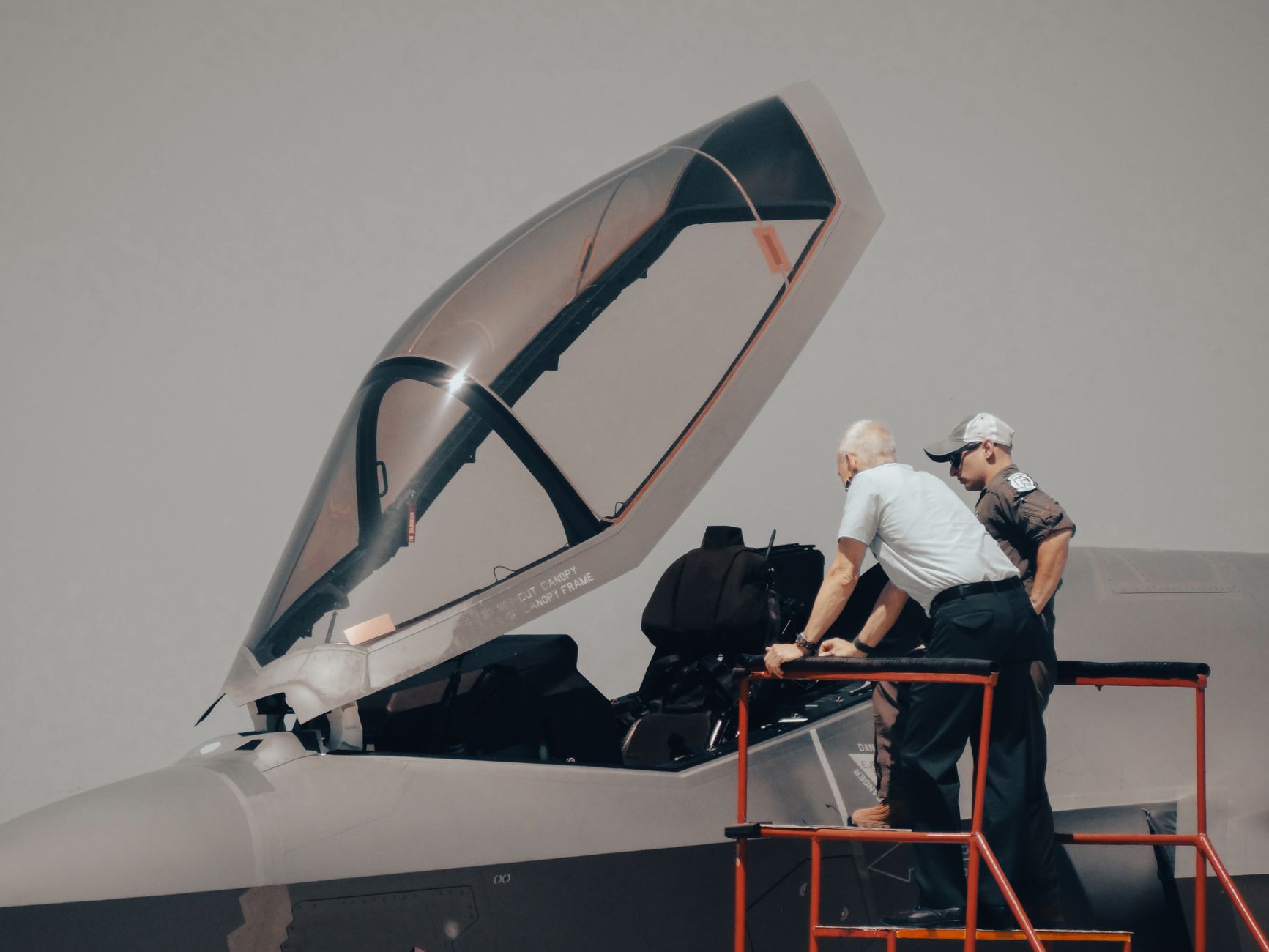
Aeronautics, the largest segment, posted 13% sales growth to $8.2 billion. F-35 production and sustainment volume added $710 million; C-130 pre-contract cost liquidation contributed $270 million. Operating margin slipped to 9.0% from 9.4%, hit by $40 million in unfavorable profit adjustments on F-16 and C-130 programs. Manageable, but worth watching. The F-35 program carries execution risk. Costs on the Lot 20 advance acquisition contract began exceeding contractual authorization and funding in Q3. Without additional government funding, future results, cash flows, and financial condition will be negatively impacted. That language is sharper than standard risk disclosure boilerplate.
Rotary and Mission Systems grew sales 3% to $4.5 billion. Operating profit rose 4% to $524 million. A $40 million favorable adjustment on a contracting matter was largely offset by $45 million in unfavorable adjustments on Heavy Lift and Seahawk programs. Space segment sales rose 4% to $3.5 billion; operating profit held flat at $331 million. Margin contracted to 9.5% from 9.9%, reflecting a mix shift toward strategic and missile defense programs like Fleet Ballistic Missile and Next Generation Interceptor, which carry lower margins than the declining national security space work.
The backlog is the quarter's most striking feature. Total backlog hit $292.0 billion, up 27% sequentially from Q2 and 51% from year-end 2025. Missiles and Fire Control drove the surge: backlog exploded to $142.5 billion from $46.7 billion at year-end, largely reflecting the multi-year PAC-3 MSE interceptor award worth $52.5 billion. That single award more than doubled the segment's backlog and gives Lockheed multi-year production visibility few industrial companies can match. Aeronautics backlog actually declined to $57.3 billion from $59.4 billion, suggesting F-35 and C-130 volume is being consumed faster than new orders replace it.
Free cash flow of $3.0 billion in the quarter, down from $3.3 billion a year ago on a tough compare for customer receipts, still covered the dividend with room to spare. Lockheed raised its dividend for the 24th consecutive year, a streak that now looks more sustainable given the FCF guidance raise. The balance sheet remains investment-grade: $21.0 billion in net debt, $6.0 billion in cash.
Two consecutive guidance raises send the clearest possible signal. Lockheed is not riding a single program cycle. Demand is broad-based across munitions, air power, and missile defense. The F-35 contracting overhang is real. But the backlog and cash flow trajectory give the company time and leverage to negotiate. For investors, the question is whether current valuation adequately reflects the multi-year visibility that a $292 billion backlog provides. This quarter's answer: probably not yet.