
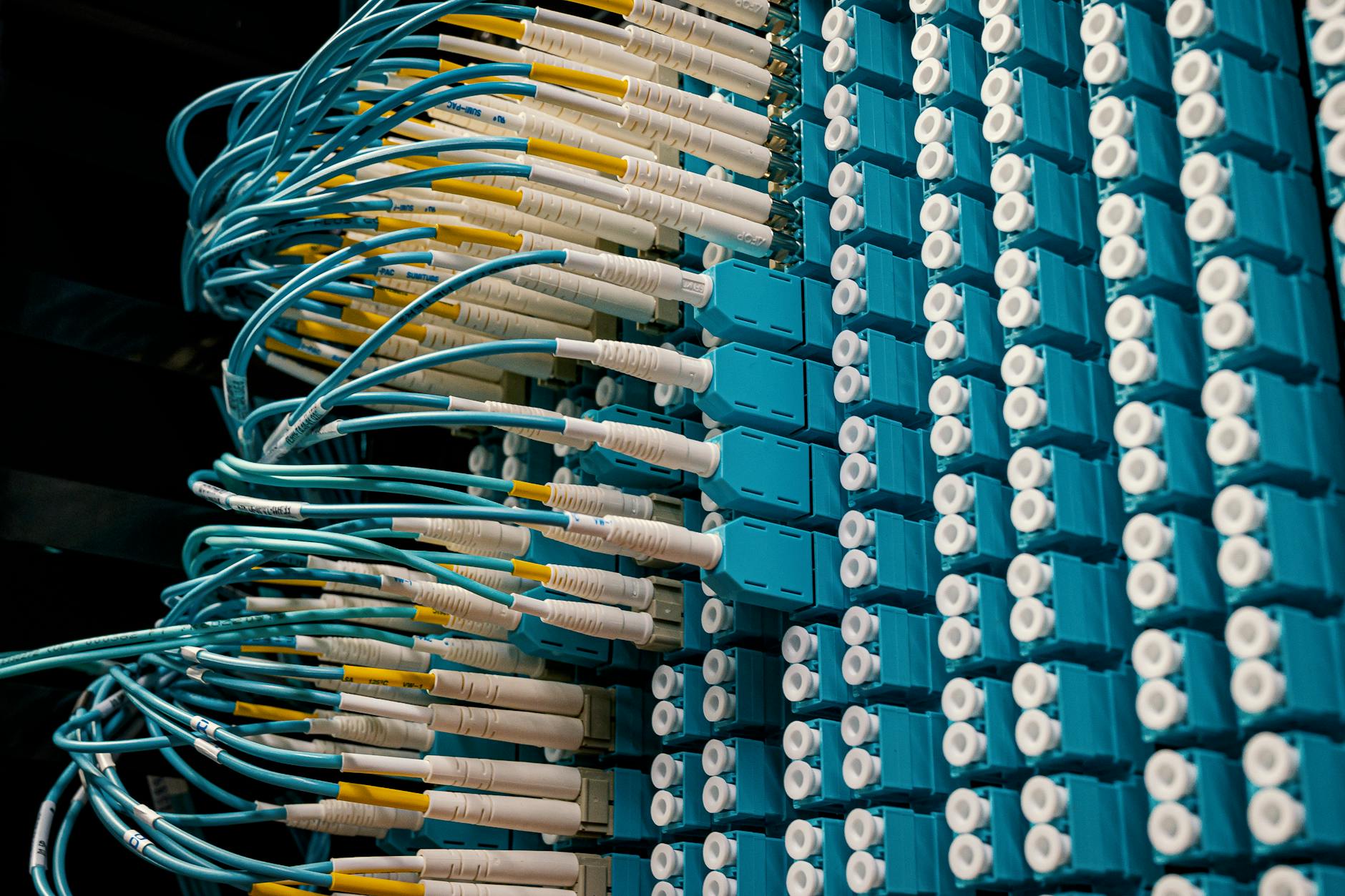
AT&T (NYSE: T) just posted its strongest consolidated service revenue growth in more than four years. The $32.3 billion top line beat consensus by $600 million, while adjusted EPS of $0.65 cleared the $0.60 estimate. The quarter offers concrete evidence that bundling fiber with 5G is generating more than headline subscriber additions. It's producing durable operating leverage.
The Advanced Connectivity segment drove the beat. Service revenue there rose 6.1%, pushing operating income up 18.9% to $7.6 billion. Margins expanded 260 basis points to 25.9%.
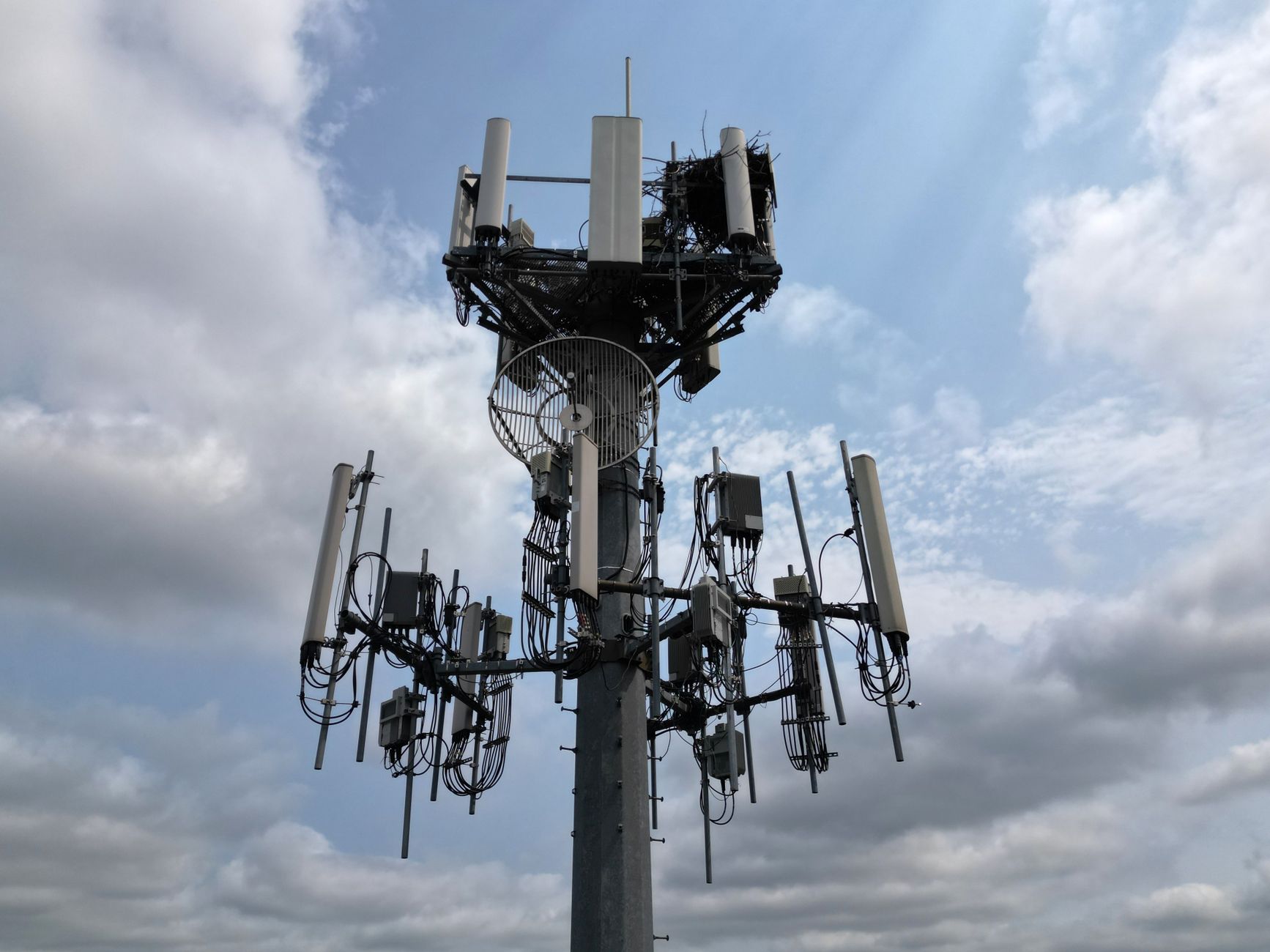
Customer additions tell the story in human terms. AT&T added 769,000 internet customers net (442,000 fiber, 327,000 fixed wireless), a record. Postpaid phone net adds hit 379,000. Combined, that's over 1 million Advanced Connectivity customers added for the second straight quarter. Postpaid phone churn held flat at 0.92% year over year. The convergence play is retaining high-value subscribers. The company noted that 42.8% of advanced home internet customers now also take AT&T wireless, up from prior periods. That cross-sell supports lower churn and higher lifetime value per account.
Management's revised 2026 guidance carries the clearest strategic signal. Adjusted EPS is now targeted at approximately $2.40, up from a prior range implying a lower midpoint. Capital investment for 2026 drops to $23 billion-$24 billion, from $24 billion-$25 billion previously. Higher profit, lower capex. The message is unambiguous: the heavy build phase for fiber and 5G is giving way to harvest mode. AT&T reiterated its $18 billion+ free cash flow target for 2026 and its 2.5x net debt-to-adjusted EBITDA goal.
There's also a new explicit commitment: $10 billion in share repurchases for 2026, part of a $45 billion+ total shareholder return plan through 2028. The buyback machine is already running hot. AT&T returned $4.8 billion to shareholders in Q3 alone, including $2.8 billion in buybacks. Year-to-date repurchases stand at $7.5 billion versus $2.7 billion in the same period last year. The $10 billion full-year target implies a significant acceleration in Q4.
The Legacy segment shrank as planned. Revenues fell 24.5% to $1.5 billion as copper decommissioning continues. Operating expenses dropped 23.5%, tracking the revenue decline closely, so margin compression was modest (90 basis points to 32.8%). AT&T expects legacy service revenue to fall 20%+ in 2026 and become immaterial by end of 2029.
The GAAP numbers were noisy. Reported diluted EPS from continuing operations was just $0.13, dragged down by a $2.6 billion non-cash impairment on the held-for-sale Mexico wireless business plus employee separation charges. The year-ago quarter had benefited from a $0.79 gain on the DIRECTV sale. Adjusted EBITDA, the metric management tracks, rose 5.4% to $12.5 billion.
The narrative going forward centers on capital efficiency. AT&T is declaring that its peak investment cycle has passed. Free cash flow growth (targeting $18 billion+ in 2026, $21 billion+ by 2028) will fund both buybacks and deleveraging. The convergence ratio, 42.8% and climbing, is the number to watch. If it keeps rising, it validates the view that AT&T's network is a competitive moat rather than merely a cost center.