
United Airlines Holdings (NASDAQ: UAL) posted record third-quarter revenue of $17.9 billion, up 17.4% year-over-year. The headline figure masks a quarter where fuel costs devoured the gains. Adjusted diluted EPS of $2.54 missed the $2.58 consensus by a penny and fell 8.6% from $2.78 a year prior. Aircraft fuel expense surged 62% to $4.8 billion.
Revenue strength ran across every segment. Premium revenue rose 17%. Basic Economy climbed 16%. Loyalty revenue added 17%, cargo jumped 23%, and contracted business revenue, the proxy for corporate demand, grew 26%. Total revenue per available seat mile increased 15.9%, the strongest quarterly unit revenue growth since the pandemic. United carried a record 49.5 million customers, notching six of its ten highest-volume travel days of the year.
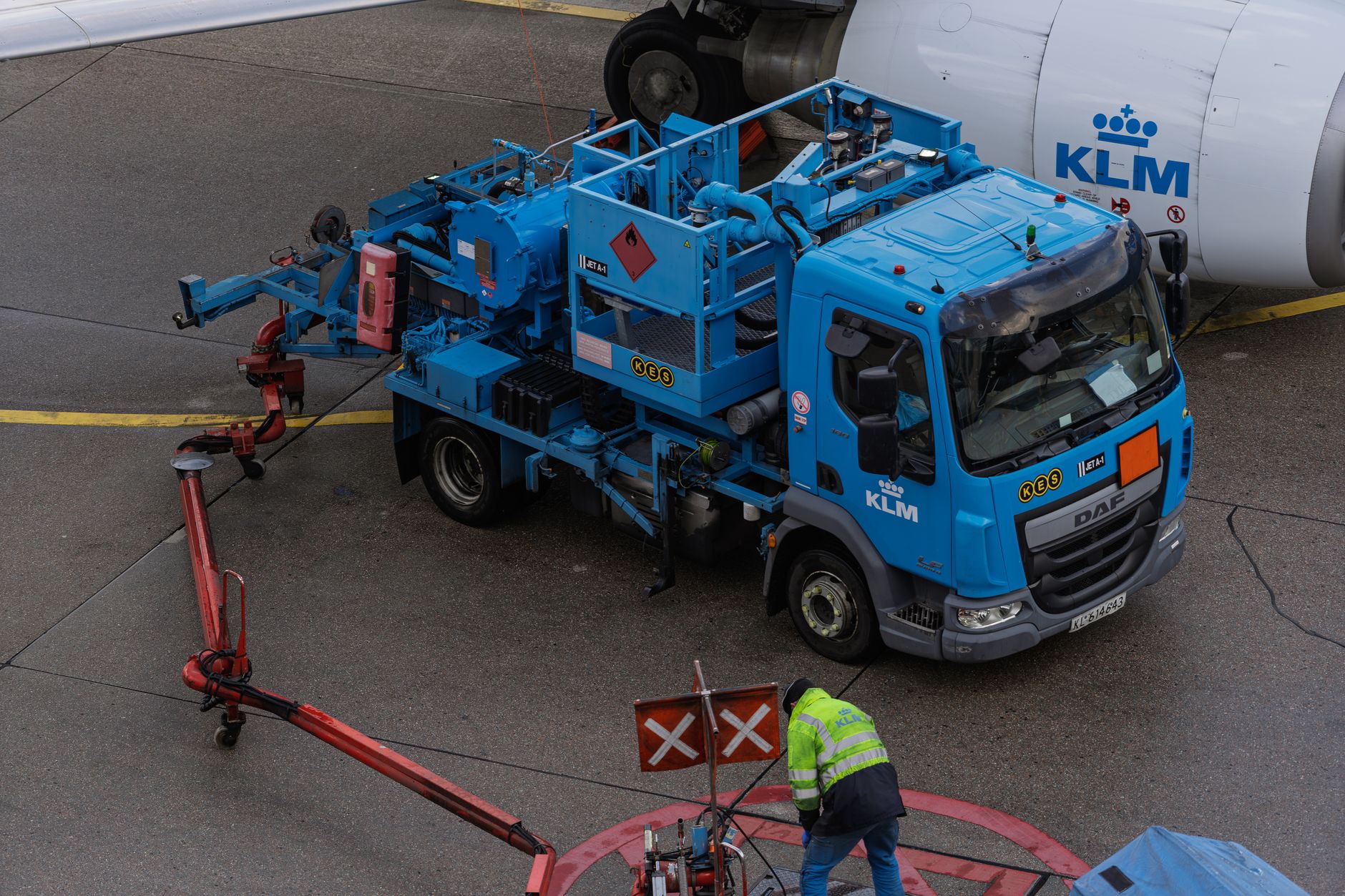
The fuel line tells a different story. Average fuel price hit $3.90 per gallon, up 60% from $2.43 a year ago. That $1.8 billion year-over-year increase in fuel expense nearly matched the $2.65 billion in total operating revenue growth. Adjusted pre-tax margin compressed 180 basis points to 6.2% from 8.0%, almost entirely from fuel. CASM-ex, which excludes fuel, profit sharing, and special charges, rose 7.8% to 13.09 cents. Labor cost inflation from ratified union contracts and continued investment spending drove the increase.
GAAP diluted EPS of $3.14 beat the adjusted figure by $0.60. The gap comes from $294 million in gains on aircraft sale-leaseback transactions booked as special credits. Real cash, but not recurring operating income. The adjusted number strips them out, and that adjusted number missed. The GAAP beat is a financing artifact, not an operating one.
Q4 guidance reveals management's caution. Total operating revenue growth is expected to accelerate past 20% year-over-year, another record. But adjusted diluted EPS guidance of $0.50 to $1.50 spans a full dollar, unusually wide, reflecting jet fuel volatility. The company assumes approximately $4.80 per gallon for Q4, well above Q3's $3.90 and roughly $0.45 above consensus. Management notes that every $0.01 change in fuel price equates to about $0.025 in EPS impact. The gap between their assumption and consensus represents roughly $1.00 in EPS for the quarter. The range is not hedging. It is an honest acknowledgment that fuel dominates the quarter and United has limited control over it.
The Starlink rollout is becoming a real competitive edge. Installed on over 640 aircraft covering about half of all flights, Starlink-equipped planes generate customer satisfaction scores nearly double those with other Wi-Fi. Fleet-wide availability is expected by end of 2027. In September alone, 5.4 million customers experienced Starlink. This drives repeat booking behavior, and United is investing aggressively to extend the lead before competitors respond.
Capital allocation has tilted toward growth. Adjusted capital expenditures for the first nine months reached $5.36 billion, with full-year target approximately $7.5 billion. The revolving credit facility expanded from $3 billion to $5 billion, pushing total available liquidity to $17.7 billion. Net leverage rose to 2.4x from 2.1x a year ago, reflecting debt taken on for fleet expansion. The largest-ever international network expansion, with service to 10 new destinations planned for summer 2027, shows management's conviction that demand will hold.
The Q4 narrative is simple. Record revenue growth is coming. Whether that revenue becomes earnings depends entirely on fuel. At $4.80, the guidance midpoint implies roughly $1.00 in adjusted EPS, a steep drop from Q3's $2.54. If fuel moderates, upside is material. If it stays elevated, United's pricing power faces its first real test since the post-pandemic surge began.