
Zoetis (NYSE: ZTS) slashed its full-year 2026 guidance across every major metric. The move overwhelms a second-quarter adjusted EPS beat and signals the animal health giant sees its US companion animal troubles as more than a passing soft patch.
The company now expects full-year revenue of $9.12 billion to $9.32 billion, down from the prior range of $9.68 billion to $9.96 billion. That is an organic operational revenue contraction of 3% to 1%, a jarring reversal from the 2% to 5% growth management forecast just three months ago. Adjusted diluted EPS guidance was cut to $6.15–$6.25 from $6.85–$7.00. Adjusted net income is now expected to decline 5% to 9% organically, versus prior guidance of 2% to 6% growth.
The revision's magnitude is the story. A roughly $600 million revenue haircut at the midpoint, combined with a 70-cent EPS cut, suggests management sees deterioration that is both broad and persistent enough to warrant a full reset, not just a trim. The implied second-half revenue run rate of roughly $4.4 billion to $4.6 billion would need to improve from the first half's $4.73 billion, but the guidance math suggests Zoetis expects the pressure to continue.
Q2 itself was a mixed bag, overshadowed by the guidance. Revenue of $2.468 billion was essentially flat year-over-year and missed the consensus estimate of $2.502 billion. Adjusted diluted EPS of $1.87 beat the $1.85 estimate by two cents, but that was driven by cost controls and a lower share count rather than revenue strength. Adjusted net income declined 2% on an organic operational basis.
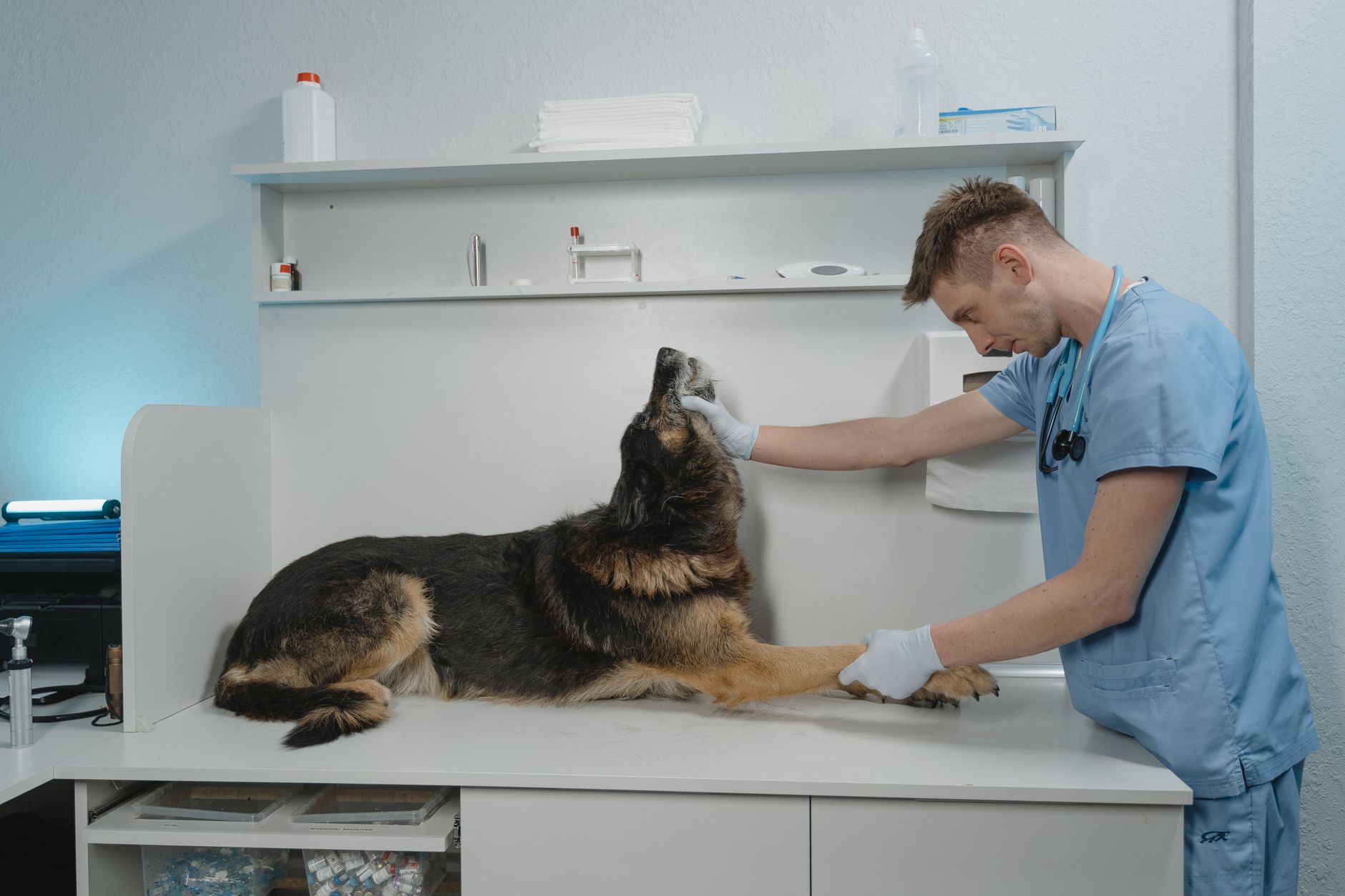
The US segment was the clear problem. Companion animal product sales fell 11% organically, driven by softer clinic visits, pet owner price sensitivity, and heightened competition in dermatology and the Simparica Trio franchise. Management described the issue as "persistent macro-driven price sensitivity" and "heightened competitive pressure." Generic competition also hit the Cerenia and Convenia brands, and Librela sales declined. US gross margin compressed to 83.1% from 84.7% a year ago, a 160bp drop reflecting both mix shift and pricing pressure.
US livestock was the offset, surging 23% on strong cattle and poultry demand. Cattle benefited from favorable producer economics and supply timing, while poultry saw increased vaccine sales tied to disease outbreak activity. Livestock, however, is roughly half the size of companion animal in the US, so the 23% gain could not offset the 11% companion animal decline.
The International segment fared better, growing 6% organically. Growth was led by parasiticides including Simparica Trio, companion animal diagnostics, and the launch of Lenivia and Portela for osteoarthritis pain in Canada and the EU. International livestock also grew 6% organically, driven by cattle and poultry. But international's relative health does not change the fact that the US is the company's largest and most profitable market.
Management is not standing still. The company completed the VitalRADS teleradiology acquisition in July, advanced more than 12 potential blockbuster pipeline candidates, and received several new product approvals including Poulvac Procerta HVT-ND in the EU and Bonqat for feline anxiety in China. These are long-term investments that do little to address the near-term demand weakness.
The guidance also includes a higher cost structure. Adjusted cost of sales as a percentage of revenue is now expected at approximately 29.0%, up from the prior 28.5%, suggesting margin pressure that extends beyond revenue mix. Adjusted SG&A was trimmed slightly to $2.33 billion to $2.38 billion from $2.35 billion to $2.40 billion, and R&D was cut to $720 million to $730 million from $735 million to $745 million. The company is pulling cost levers, but not enough to offset the revenue shortfall.
The forward read is cautious. Zoetis is signaling that the US companion animal market is structurally softer than it appeared six months ago. The guidance revision embeds an assumption that conditions will not improve materially in the second half. The pipeline and international growth provide a long-term narrative, but the near-term earnings power of the business has clearly diminished. Investors should watch whether the company's commercial strategy adaptations and targeted investments can stabilize the US companion animal franchise, or whether the competitive and demand pressures prove more durable than management expects.