

Viasat (NASDAQ: VSAT) opened fiscal 2027 with a quarter that looked unremarkable on the surface. Revenue of $1.16B slipped 1% year over year, a whisker below the $1.20B consensus. Non-GAAP diluted EPS of $0.17 matched the prior-year period but easily cleared the Street's expectation of a $0.32 loss, a gap driven largely by lower interest expense as the company continues to delever. Adjusted EBITDA of $381M fell 7% YoY.
An in-line print. But the quarter's real weight is forward-looking, not backward-looking. The numbers that matter most are not on the income statement.
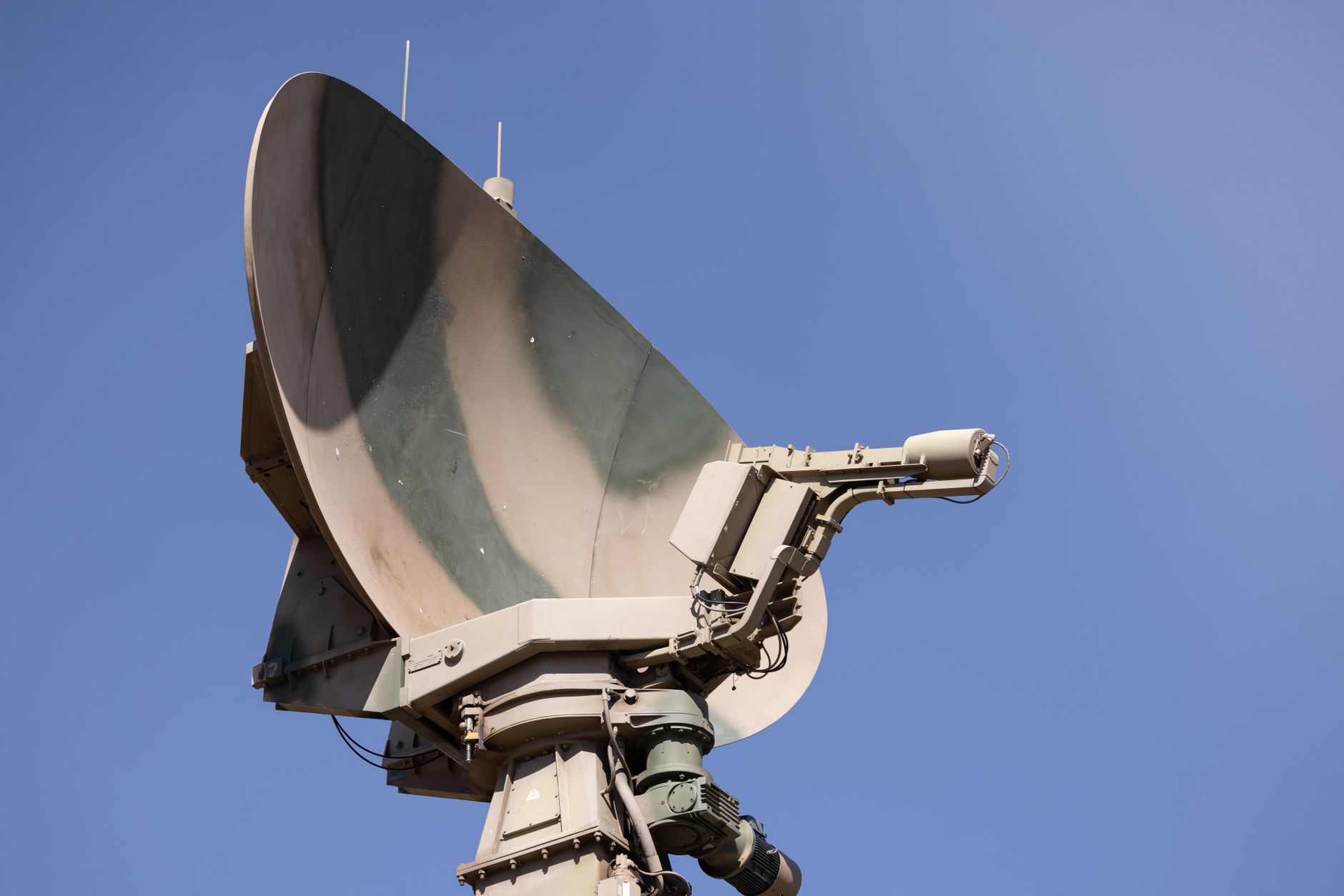
Record Defense and Advanced Technologies (DAT) awards of $524M, up 22% YoY, pushed total company backlog to $4.2B, a 19% increase. The DAT segment alone posted a book-to-bill of 1.6x and a backlog of $1.4B, up 32% YoY. The headline driver was the PTS-G program, a U.S. Space Force contract to build a small, maneuverable GEO satellite. More than any single award, the breadth of the wins matters: tactical networking product revenue grew 36% YoY on international TrellisWare and MOJO terminal sales, and the company secured a Network Control Station contract with the Czech Republic. These are not one-off wins; they are evidence of a broadening international and multi-domain demand base.
This is the pivot. The DAT segment's revenue declined 4% in the quarter, dragged down by a supplier delay in space and mission systems and by lower IP licensing revenue. But the awards and backlog suggest that revenue decline is a timing issue, not a demand problem. Management explicitly expects DAT revenue to grow mid-teens for the full fiscal year. The Q1 dip, combined with the record backlog, sets up a second-half ramp that the company is banking on.
The Communication Services segment, meanwhile, was flat at $825M in revenue. Aviation services grew 11% YoY and government satcom rose 10%, but fixed broadband and other services fell 27%, a structural decline that is unlikely to reverse. The segment's adjusted EBITDA slipped 3% as growth in aviation was offset by higher R&D spending on multi-orbit initiatives and the absence of prior-year equity income from Navarino. The fixed broadband subscriber base now sits at approximately 115,000, down from 128,000 a year ago, with ARPU flat at $111. The segment is becoming an aviation and government satcom story, with the legacy residential business shrinking predictably.
The ViaSat-3 program is the other critical timeline. Management confirmed that F2 has completed its bus in-orbit test and is on track for service entry by September 2026. F3, destined for Asia-Pacific, entered IOT after quarter end. These satellites are not just capacity additions; they bring geographic coverage flexibility and resilience that management believes will open new DAT opportunities, including multi-orbit space systems. The capital expenditure guidance of $950M to $1.0B, reiterated, suggests the heavy spending on these assets is nearing its peak.
Free cash flow excluding non-recurring items was $72M, up 19% YoY, and the net leverage ratio improved to 3.2x from 3.6x a year ago. The company ended the quarter with $2.9B in available liquidity. Guidance for the full year was reiterated: mid-single-digit revenue growth, flat to slightly up adjusted EBITDA, and free cash flow of approximately $180M. Management is signaling a stronger second half, a posture that the backlog supports.
The risk is execution. The DAT revenue ramp depends on converting that $1.4B backlog into recognized revenue, which in turn depends on supplier performance and program milestones. The ViaSat-3 service entry dates are tight. And the Communication Services segment's fixed broadband decline is structural, not cyclical. But the Q1 awards data makes a credible case that the company's growth trajectory is accelerating, even if the income statement hasn't caught up yet.