
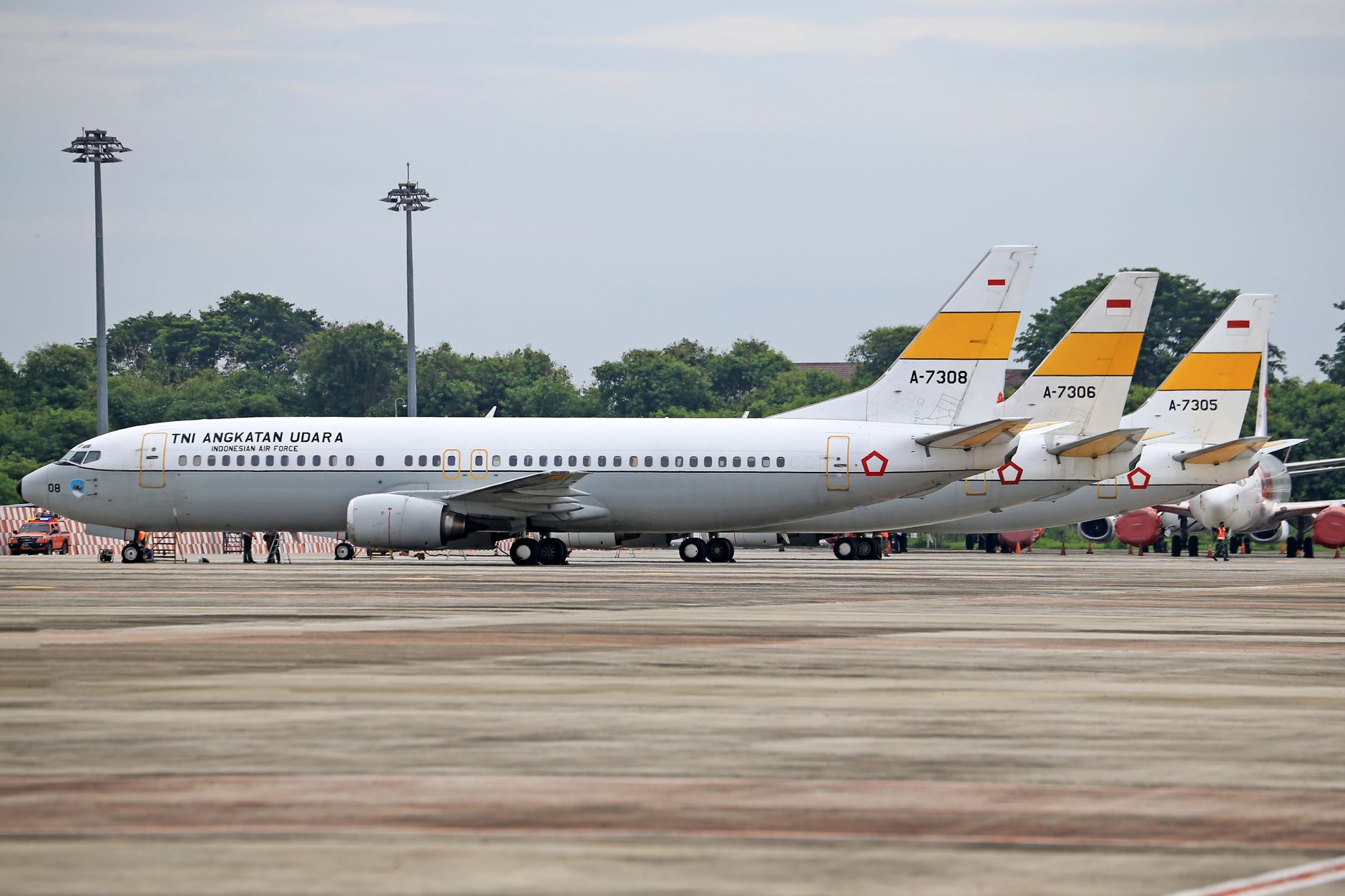
Boeing (NYSE: BA) delivered more airplanes in Q2. The numbers underneath tell a more complicated story. Revenue rose 8% year over year to $24.6 billion, beating the $24.3 billion consensus, as commercial deliveries climbed 14% to 171 units. Yet core loss per share of ($0.76) missed analyst estimates of ($0.28) by a wide margin. GAAP loss per share of ($0.67) also fell short.
The revenue beat came from volume, not pricing. Commercial Airplanes revenue increased 8% to $11.8 billion on those 171 deliveries: 129 737s, 25 787s, and 10 767s. The 737 program began transitioning to a production rate of 47 per month during the quarter and activated low-rate initial production on the North Line in July. Certification flight testing for both the 737-7 and 737-10 is complete, with certification expected in 2026 and first deliveries in 2027. The 777X program received FAA approval to begin certification flight testing under Type Inspection Authorization 4B, with first delivery also targeted for 2027.
The miss is concentrated in Defense, Space & Security. There, revenue rose 13% to $7.5 billion but the segment swung to an operating loss of $15 million from a $110 million profit a year ago. A $280 million charge on the VC-25B program, driven by investments in additional production and certification resources, erased what would have been a profitable quarter for the division. This is the second consecutive quarter where fixed-price development programs have pressured Defense margins. The VC-25B first delivery is still expected in 2028, but the charge suggests cost overruns are ongoing.
Operating cash flow surged to $1.4 billion from $227 million a year ago. Free cash flow turned positive at $631 million versus negative $200 million in Q2 2025. The improvement reflects higher deliveries and working capital timing, particularly a $4.7 billion increase in advances and progress billings. That working capital benefit is inherently lumpy. The company burned $823 million in free cash flow over the first half. The cash position remains adequate at $20.0 billion, with $10.0 billion in undrawn credit facilities, but debt of $45.9 billion leaves the balance sheet leveraged.
Global Services, typically Boeing's most consistent profit engine, saw revenue rise just 1% to $5.3 billion while operating margins contracted 180 basis points to 18.1%. Management cited the Digital Aviation Solutions divestiture, higher costs, and unfavorable mix. The margin compression in a segment that has historically delivered 19-20% margins is worth watching, though the $33 billion backlog provides some buffer.
Demand is not the issue. The record $715 billion total backlog, including $597 billion in commercial airplanes, underscores that. Over 6,200 commercial airplanes in backlog provide multi-year visibility. The question is whether Boeing can convert that backlog into profitable deliveries at a pace that justifies the production investments underway. The 737 ramp to 47 per month, 777X certification, and 787 production stability are all positive signals, but the Defense segment's fixed-price development losses and the absence of financial guidance leave the earnings trajectory uncertain. Management reiterated program timelines but offered no EPS or cash flow outlook, a cautious posture that contrasts with the operational momentum narrative.
Boeing is producing more and generating cash, but the profit conversion remains elusive. The Defense charge is a one-off in name only; it reflects structural challenges in fixed-price development that have plagued the segment for years. Until those programs mature, the earnings miss pattern may persist even as the top line improves.