
Planet Labs PBC (NYSE: PL) started its fiscal year with a beat. Revenue hit a record $94.2 million, 42% higher than last year's $66.3 million and about $4.2 million above the $90 million consensus. The non-GAAP net loss per share of ($0.03) also edged the ($0.04) estimate. The headline GAAP net loss of ($138.9 million) looks alarming. It is not. That GAAP figure includes a $106.5 million non-cash charge from changing the fair value of warrant liabilities, a move driven by stock price appreciation. Planet redeemed all its public warrants, pulling in ~$107.8 million, and exercised the remaining private placement warrants on a cashless basis. The liability is now zero. These revaluation losses will not recur. The GAAP comparison is a distraction from the underlying operating trajectory.
Revenue growth accelerated, jumping to 42% from the 31% pace reported in Q4 FY2026. Government and commercial channels both drove the increase. Planet signed an eight-figure, one-year contract with an international defense and intelligence customer for dedicated satellite capacity. The U.S. National Geospatial-Intelligence Agency awarded a $21.9 million contract extension for maritime surveillance and a new global monitoring award. The U.S. Navy renewed for $7.5 million. These are not small-ticket renewals. They show a deeper integration of Planet's data into sovereign security architectures, a trend that has been building and is now clearly accelerating.
Backlog grew 72% year-over-year to over $906 million. Remaining performance obligations—the non-cancelable portion—stood at $816 million. The gap between the two numbers widened to $90 million from $48 million at year-end. That is worth watching. A larger cancelable backlog means more revenue is technically at risk from termination-for-convenience clauses, standard in government contracts. Planet expects to recognize about 40% of total backlog within 12 months and 69% within 24 months. The visibility is real, but the shift toward cancelable contracts introduces a modest execution risk for investors to monitor.
Gross margin landed at 54% GAAP and 56% non-GAAP, down from 55% and 59% last year. The 300bp decline in non-GAAP gross margin is notable. Planet blames the mix. More revenue came from lower-margin dedicated capacity services and satellite tasking, which have different cost structures than pure data subscriptions. The company's Q2 guidance for non-GAAP gross margin of 52% to 55% implies more pressure. The full-year range of 52% to 54% suggests management expects this mix shift to persist. This is not automatically a negative. Dedicated capacity contracts are typically larger, longer-duration, and stickier than subscriptions. But it does mean revenue growth and gross margin are moving in opposite directions for now. The path to adjusted EBITDA breakeven will depend on operating leverage elsewhere.
Adjusted EBITDA loss was ($1.0 million) in Q1, versus a positive $1.2 million a year ago. That is a modest miss. Q2 guidance calls for adjusted EBITDA of $0 to $5 million—essentially breakeven at the midpoint. Full-year guidance of $0 to $10 million implies the company expects to reach sustained profitability in the second half. Revenue guidance for Q2 ($102M to $107M) implies sequential growth of 8% to 14%. The full-year range of $425M to $441M suggests roughly 30% growth at the midpoint. Management chose not to raise guidance despite a beat that arguably justified it. That caution fits a company still carrying a GAAP net loss and wanting to set achievable targets as it approaches profitability.
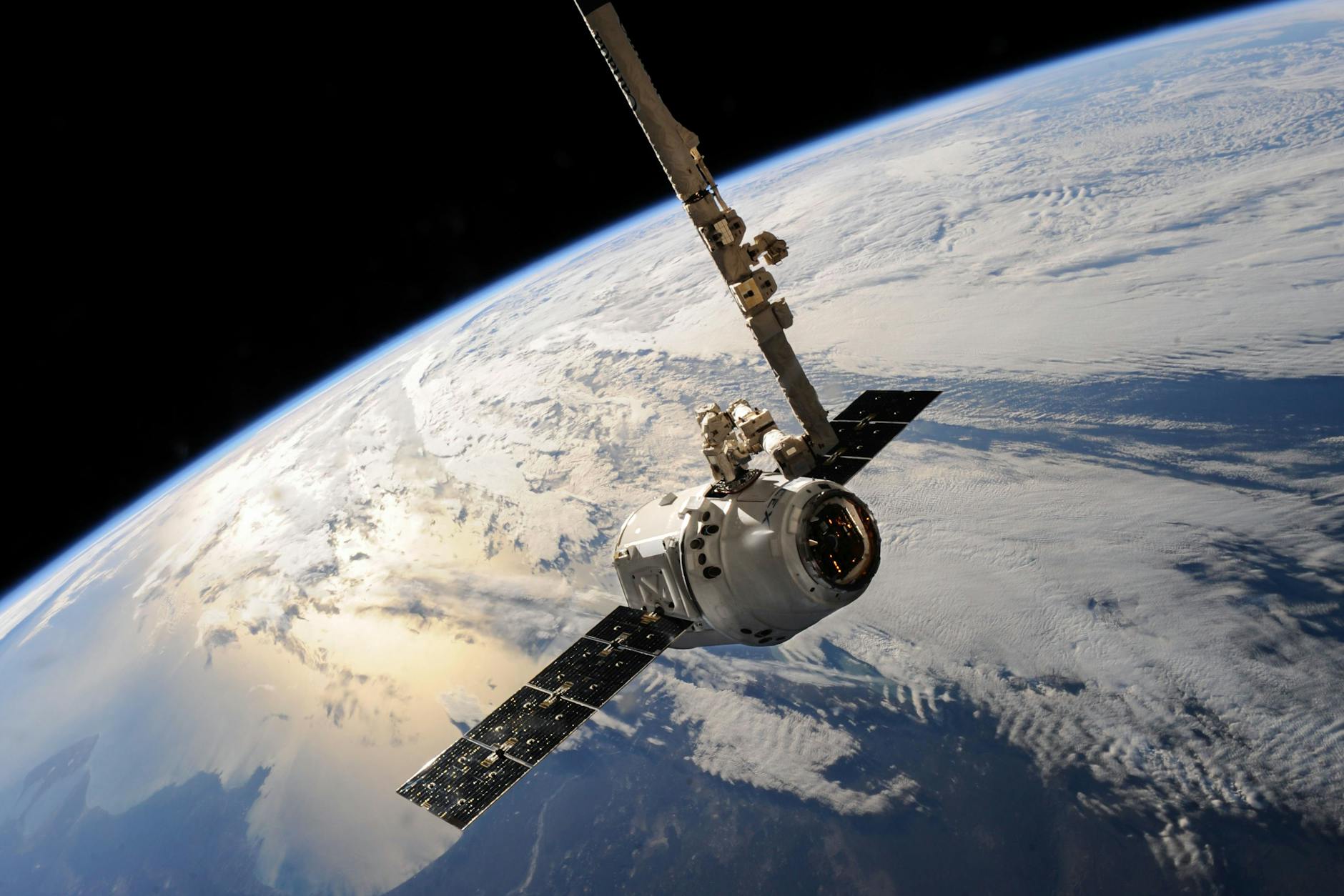
Planet ended the quarter with $730.8 million in cash, cash equivalents, and short-term investments, up 223% year-over-year, mostly from the warrant exercises. That is a fortress balance sheet for a company with a $14.5 billion market cap. The question is how aggressively management deploys it. Capital expenditure guidance of $80 million to $95 million for the year points to continued investment in satellite launches. Planet launched three Pelican satellites during the quarter, including Sweden's first sovereign reconnaissance satellite, and shipped Pelican-11 for an upcoming SpaceX mission. The company also started a private beta of a new AI application that makes its data archive searchable through natural language and announced SuperRes, an AI-powered resolution enhancement tool. These product moves show Planet is investing in software and AI to differentiate its data, not just launching more hardware.
The dominant story this quarter is the revenue acceleration and the backlog build, not the GAAP loss. Warrant liabilities are gone. The balance sheet is clean. The path to adjusted EBITDA profitability is visible in the guidance. Planet is moving from a growth-at-all-costs narrative to one where operating discipline and revenue quality matter more. The margin compression from the mix shift is the key variable to watch. If Planet can hold non-GAAP gross margins near 52% while sustaining 30%+ revenue growth, the adjusted EBITDA breakeven target for FY2027 looks achievable. If margins slip further, the path narrows.