

ON Semiconductor (NASDAQ: ON) rewrote the terms of its largest pending acquisition. The Synaptics deal shifts from roughly $7 billion in stock to about $5.7 billion in cash. A smaller tuck-in, Ferric, came alongside. So did a raised 2030 AI data center revenue target: now more than $3 billion, up $500 million. The quarter that hosted all this, Q3 FY2026, delivered revenue of $1.72 billion, up 11% year over year, and non-GAAP EPS of $0.90, up 43%. Strong. But secondary.
The Synaptics re-cut is what matters. Paying $1.3 billion less, and paying in cash rather than equity, changes two things at once. No share issuance means no dilution. But the deal's economics shift from an exchange of paper to a draw on liquidity. onsemi ended the quarter with $4.16 billion of cash and short-term investments against $4.46 billion of total debt. Free cash flow in the quarter alone was $489 million, 28% of revenue. The company can fund a $5.7 billion cash purchase. Doing so, however, consumes most of the cash cushion rebuilt over the past year unless new borrowings fill the gap. Management's claim that the revised structure is immediately accretive to non-GAAP EPS is credible because no new shares are created. The open question is the financing mix, and its cost.
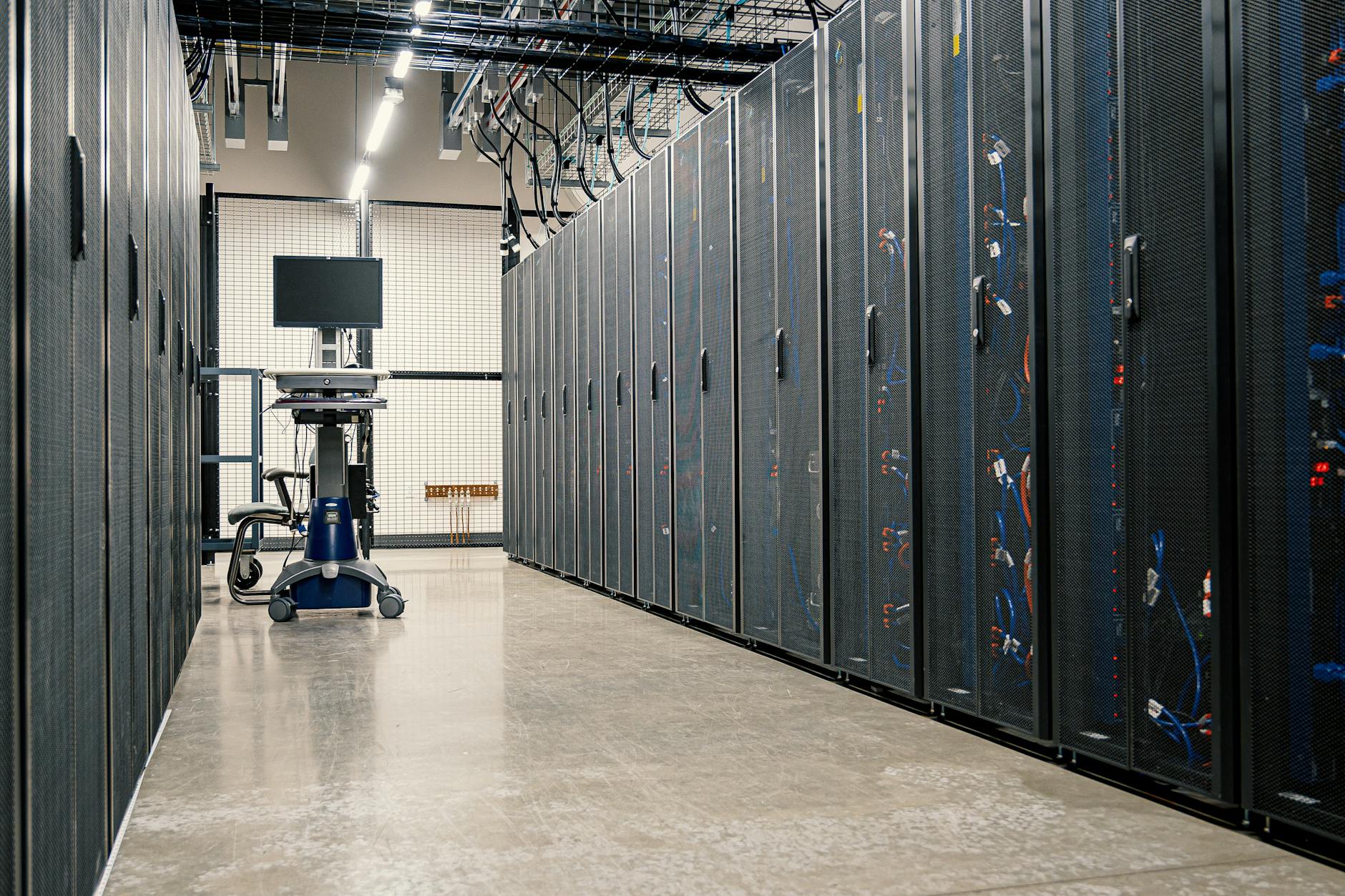
Ferric is the strategic complement. onsemi frames it as establishing leadership in next-generation AI processor power delivery, the part of the AI buildout where its power-management franchise has genuine standing. AI data center revenue grew 39% sequentially and 175% year over year in the quarter. The raised 2030 target of greater than $3 billion implies management expects that line to keep compounding well above the corporate average. That is the bet the two deals underwrite: onsemi wants to be a power supplier to AI accelerators, not a broad analog house with an AI kicker.
The core numbers support the operating-leverage story management tells. Non-GAAP gross margin reached 41.2%, up 190 basis points sequentially, the fifth consecutive quarter of expansion. Non-GAAP operating margin hit 23.2% versus 19.2% a year ago. Segment detail reveals where growth originates. PSG revenue of $889.9 million rose 21% year over year. AMG of $597.3 million rose 2%. ISG of $235.1 million rose 2%. The disparity matters. The power portfolio carries the company. Analog and sensing are roughly flat. That is why the AI data center narrative does so much work in the investment case.
Q4 guidance points to continued expansion, not acceleration. Revenue of $1.715 billion to $1.815 billion brackets the Q3 print at the midpoint. Non-GAAP gross margin of 41.5% to 43.5% implies further sequential improvement. Non-GAAP EPS of $0.95 to $1.07 would extend the earnings growth streak. Watch the margin guide: a midpoint near 42.5% puts another 130 basis points of expansion on the board, consistent with the fab-rights programme management credits for the run so far.
Capital allocation demands scrutiny alongside the deal news. onsemi repurchased only $19.9 million of stock in Q3, down sharply from $344.8 million in Q2 and $325.0 million a year ago. It raised $1.47 billion of debt in Q2 while paying $351.6 million for bond hedges and collecting $281.0 million from warrants. The buyback slowdown is rational if cash is reserved for Synaptics. Still, investors should read the reduced repurchase pace as a signal: the balance sheet is now earmarked for M&A rather than return of capital. A defensible choice given the strategic logic. Also a real change in the shareholder-return profile.
What follows is the financing plan for the cash consideration, and whether Ferric integration appears in the AI data center revenue line before the Synaptics close. The Q3 print justifies confidence in the margin trajectory. The deal structure justifies a closer look at the balance sheet. A $5.7 billion cash outlay against $4.16 billion of liquidity is a commitment that will define onsemi's capital structure for several quarters.