

AbbVie (NYSE: ABBV) raised its full-year adjusted diluted EPS guidance for the second time this year after a third quarter that beat both top and bottom-line estimates. The new range of $13.95 to $13.99, up from $13.76 to $13.96, is a narrow bump at the midpoint. The direction matters more than the magnitude. Management is signaling confidence that the post-Humira growth story is accelerating, not just holding.
Revenue rose 10.3% reported to $17.404 billion, beating the $17.319 billion consensus. Adjusted diluted EPS of $3.82 topped the $3.73 estimate and more than doubled the $1.86 from a year ago, though the prior-year quarter included $2.7 billion in acquired IPR&D expense that depressed comparables. On an operational basis, revenue growth was 10.5%, confirming that currency was a minor drag.
The immunology portfolio remains the engine, growing 16.3% to $9.165 billion. Skyrizi hit $5.776 billion, up 22.7%. Rinvoq contributed $2.706 billion, up 23.9%. Humira fell 31.2% to $683 million, but its share of total immunology revenue is now below 7.5%, down from over 12% a year ago. The transition is nearly complete, and the new assets are more than filling the gap. Combined, Skyrizi and Rinvoq added roughly $1.7 billion in incremental revenue versus the prior year, while Humira shed about $310 million. The net gain of $1.4 billion in immunology alone exceeds the total revenue growth of the company.
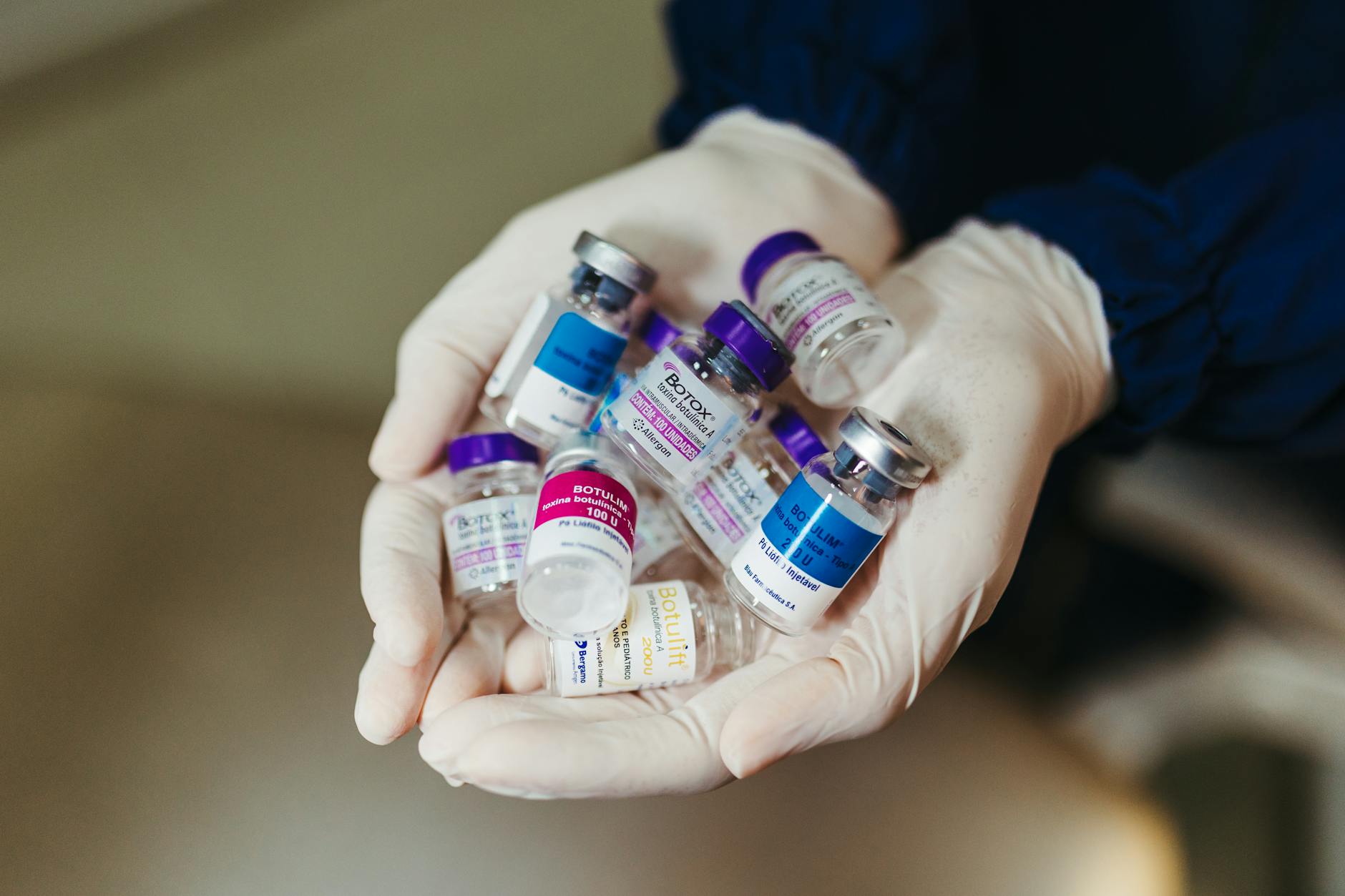
Neuroscience grew 19.4% to $3.389 billion. Botox Therapeutic reached $1.080 billion and Vraylar $1.068 billion. The migraine franchise, Ubrelvy and Qulipta, combined for $847 million, up 32% collectively. Oncology was essentially flat at $1.696 billion: Imbruvica declined 26.1% to $522 million, offset by Venclexta up 10.7% and Elahere up 31%. Aesthetics slipped 1.4% to $1.176 billion, with Juvederm down 11.9% and Botox Cosmetic up 4.9%.
The guidance raise is modest in absolute terms. It comes despite $0.69 per share of year-to-date IPR&D and milestone expense, including $0.11 in the quarter from the Apogee Therapeutics acquisition. That deal closed during the quarter, adding late-stage IL-13 and TSLP assets to the immunology pipeline. Management is effectively saying that underlying operational momentum is strong enough to absorb deal-related dilution and still lift the outlook.
The board also declared a 5.2% dividend increase to $1.82 per quarter, payable in February 2027. Since AbbVie's inception in 2013, the dividend has grown 355%. The increase is consistent with the company's history but notable given the ongoing investment in pipeline expansion through M&A.
What to watch next: the pace of Skyrizi and Rinvoq market share gains in inflammatory bowel disease, where new data at ACG and UEG showed strong endoscopic outcomes. The Apogee integration will also bear watching, as the zumilokibart asset targets atopic dermatitis, a market where Rinvoq already competes. The guidance raise, while small, suggests management sees no reason to slow down.